What happened
On 17 September 2024 ERCOT presented its own measurements of large flexible load behaviour to a NERC working group (slides). ERCOT counts a site drawing 75 MW or more as a Large Load, and calls it flexible if it can raise or lower consumption in response to wholesale prices or grid conditions. In Texas that is mostly Bitcoin mining.
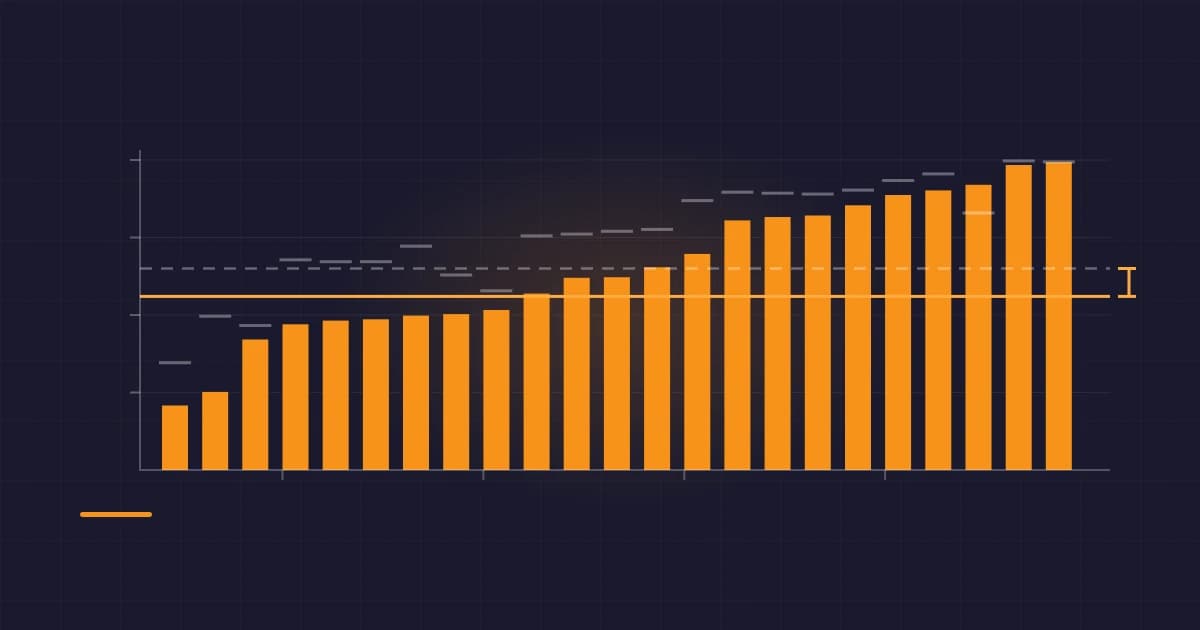
Across 23 such sites from September 2023 to February 2024, ERCOT counted the share of five-minute intervals in which each one actually curtailed once the price passed its own strike price. The answers ran from 20.8 percent to 99.3 percent. The simple average was 65 percent; weighted by load it was 56 percent. Above $1,000/MWh the load-weighted figure was still only 78 percent. ERCOT's own conclusion on the slide: larger sites are less price-responsive than the group as a whole.
What it changes
It puts a number on a word that had been doing a lot of unexamined work.
Three different arrangements get called demand response, and they pay differently.
The first is price response under a fixed-price supply contract. You stop mining and sell the power you had already bought at the spot price.
The second is ancillary services, where a load bids a slice of itself into ERCOT's reserve markets. Riot Platforms' annual report is unusually blunt about what that buys: the company "receives compensation for its participation in ancillary services whether or not the Company is actually called to power down." It is a payment for standing ready, not for stopping. Riot books both channels as one line, power curtailment credits, worth **27.3 million in 2022 (10-K).
The third is Four Coincident Peak. Cut consumption during the four peak fifteen-minute intervals of the summer months and next year's transmission charges fall. Nobody pays you. You avoid a cost that is then allocated to everyone else.
Which of the three is doing the work is exactly what ERCOT's measurement gets at.
What it does not change
Being interruptible is real, and sometimes it is dramatic. During Winter Storm Elliott in December 2022, ERCOT's report records registered flexible loads falling from 1,530 MW to 130 MW, a 91.5 percent reduction, with all roughly twenty known sites cutting to some degree. It also records that ERCOT never declared an energy emergency in that storm, and that most sites curtailed when prices passed 110/MWh. That was an economic response, not a rescue.
Flexibility also cuts the other way. ERCOT counted eight days in summer 2023 when at least 300 MW of large load ramped up within fifteen minutes while prices were above 500/MWh.
And the arrangement is not free to other customers. Handling that ramping means buying more Regulation, which ERCOT notes "invites questions of cost causation or increases costs for ratepayers."
Context
ERCOT set up an interim large-load interconnection process in March 2022, and its Large Flexible Load Task Force first met that April. Texas then wrote the category into statute: Senate Bill 1929, effective 1 September 2023, requires a facility needing more than 75 MW of interruptible power to register with ERCOT within one business day.
The contrast with Kazakhstan is the whole point. Both systems switch miners off first. One does it because there is nothing to spare. The other pays for the option, and is now checking how often the option gets exercised.