What happened
On 21 May 2021 the State Council's Financial Stability and Development Committee published a statement on financial risk that spent one line on Bitcoin: crack down on mining and trading. Provincial orders followed through June, and the mining industry that had been concentrated in Sichuan, Xinjiang and Inner Mongolia was told to stop.
It did. Estimates of China's share of global hashrate before the ban run from half to around two thirds, and most of it went offline inside a month.
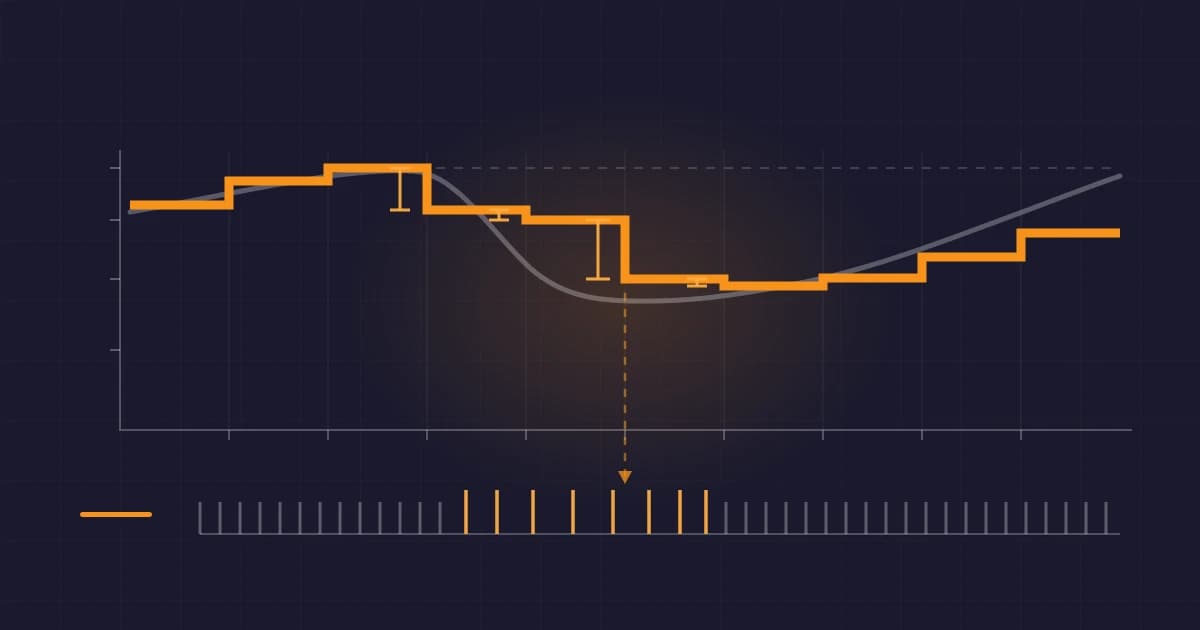
On 3 July 2021 the network's difficulty adjusted downward by 27.94 percent, from roughly 19.93 trillion to 14.36 trillion. It is the largest negative adjustment Bitcoin has recorded, and the third consecutive downward move since late May.
What it changes
Nothing about the rules. This is the part worth sitting with.
Bitcoin targets one block every ten minutes on average. It does not achieve this by having anyone in charge of the pace. Every node recalculates a difficulty target every 2,016 blocks, from how long the previous 2,016 actually took. Blocks arriving too slowly means the next target drops; too quickly means it rises.
So when half the hashrate vanished, blocks did slow down, for weeks. The average block interval stretched well past ten minutes, confirmations took longer, and the network kept producing blocks the entire time. Then the retarget arrived and pulled the interval back toward ten minutes at the new, smaller hashrate.
A system with an operator would have needed the operator to decide something. This one needed 2,016 blocks to elapse. The adjustment is not a response to the news, because the code has no concept of news. It is a response to arithmetic on timestamps.
What it does not change
The supply schedule. Difficulty and issuance are separate: the subsidy halves on block height, not on time or hashrate, so a slower chain does not mint more or fewer coins, it just reaches the next halving later in wall-clock terms.
It does not make Bitcoin decentralised either. Concentration in China was a real risk and losing it is a real improvement, but hashrate that leaves one jurisdiction has to land in another, and the places it is reportedly heading have concentrations of their own. Geography changes; the underlying question of who can be pressured does not go away.
And a 51 percent drop in hashrate is a genuine reduction in the cost of attacking the chain during the window it takes to recover. That the network kept working is not the same as nothing having been at stake.
Context
China has restricted Bitcoin before, and never like this. The central bank barred banks from handling it in 2013 and the domestic exchanges were closed in 2017, but the machines were left alone, and the country went on hosting most of the world's mining because it had cheap coal in the north and cheap hydro in the south.
This round started with Inner Mongolia, which said in late February that it would shut mining down to meet energy targets. The 21 May statement generalised the instruction, and provincial regulators worked through it over the following month. Sichuan's order arrived on 18 June, in the middle of the rainy season, when the hydro-powered farms there were at their most productive. That is why the drop is this steep rather than merely large.
What is not yet known is where the machines end up. Containers are reported to be moving toward Kazakhstan, Russia and the United States, and racking a fleet needs power contracts, buildings and grid connections that nobody has ready. Until that happens, this hashrate is neither offline for good nor coming back tomorrow, it is in transit. The next retarget will say more about the pace of that than any announcement will.